Recent Tweets

NEW Fujifilm X-Pro2, X-E2s, X-70 & more

Fujifilm - New Product Announcements in summary

Fujifilm announced to the world six new products releases on Friday 15 January in Tokyo Japan. Here is a quick overview of the newly announced products that will be hitting stores in the coming weeks and months.

Fujifilm X-Pro2 – New flagship model taking photography to the next level

One of the most significant announcements was the launch of the flagship X-Pro2 premium interchangeable lens camera due in February 2016. The X-Pro2 boasts an improved design and follows in the steps of its multi-award winning predecessor the Fujifilm X-Pro1.


Key Features:

  • World’s first advanced hybrid Multiview finder
  • Newly developed 24.3MP X-trans CMOS II sensor
  • New high performance X Processor Pro image processing engine
  • New focal plane shutter with a top speed of 1/8000 second
  • Flash sync up to 1/250 second
  • Robust weather resistant body
  • 3.2-inch high resolution LCD screen
  • Dual SD Card Slot
  • Built-in Wi-Fi Connectivity

More Product Info:

For more information on all the features and specs of the NEW X-Pro2 can be found HERE.

Give me more:

Check out the NEW X-Pro2 in action >

Availability:

The NEW X-Pro2 is expected to arrive in-store during the second half of February.

Pre-order:

We are now accepting pre-orders for the X-Pro2. Click HERE


Fujifilm XE-2s – Rangefinder-style design

The X-E2s is a compact, durable and lightweight mirrorless camera that inherits its functionality and rangefinder-style design from the original and current X-E2.



Key Features:

  • APS-C X-Trans CMOS II Sensor
  • Built in phase detection AF
  • EXR Processor II Image Processor
  • 2.36 million-dot OLED Viewfinder
  • Built in WiFi for Instant Photo Sharing
  • 3.0-inch 1,040K-dot LCD

More Product Info:

Find out a little bit more on the new X-E2s on our website HERE.

Availability:

The NEW X-E2s should be available in-store from March 2016. 

Pre-order:

Please feel free to register your interest in this new product.


Fujinon XF100-400mm Lens – The latest addition to the XF lens line up

Fujifilm announced the release of the new Fujinon XF100-400mm f4.5-5.6 R LM OIS WR Lens.

A welcome addition to the X Series range of lenses the new XF100-400mm super telephoto zoom lens covers a 35mm focal length equivalent of 152-609mm.

Key Features:

  • Super telephoto lens
  • High performance optical construction
  • 21 elements in 14 groups
  • Optical Image Stabiliser
  • Water and Dust resistant
  • Operate in low temperatures up to -10 degrees
  • Twin linear autofocus motors
  • Compatible with the XF1.4X TC WR tele converter

More Product Info:

For more information on all the features and specs of the NEW Fujinon XF100-400mm lens can be found HERE.

Availability:

The Fujinon XF100-400 is expected in-store from February 2016.

Pre-order:
Please feel free to register your interest in this new product.


Shoe Mount Flash EF-X500 – External flash to extend your photography

As a new product release it may pale into significance when compared to the release of the X-Pro2 but for many this flash is significant and highly anticipated by owners of the X-T1 and future owners of the X-Pro2.
We will share official images of the new external flash once they become available. 

Key Features:

  • High speed synchronisation
  • Multiple flash TTL auto functions
  • Weather and dust resistant
  • Compatible with Fujifilm X-T1 and X-Pro2

Availability:

The new Shoe Mount Flash EF-X500 is expected to be available in-store from May 2016.

Pre-order:

Pre-order on this flash will be available in the coming weeks.


Fujifilm X70 – The smallest and lightest X-Series model with an APS-C size sensor

Fujifilm announced their smallest and lightest fixed lens X-Series model with an APS-C size sensor.


Key Features:

  • The Ultimate APS-C sized sensor compact X
  • New 18.5mm wide angle lens
  • X-Trans™* CMOS II & EXR Processor II
  • Manual Dial Operation
  • Auto Mode Selector Lever
  • Fastest AF 0.1 sec
  • New Tilting LCD & Touchscreen Monitor
  • New Digital Tele-Converter

More Product Info:

For more information on the X-70 click through to HERE.

Availability:

The New Fujifilm X-70 is expected in-store for February 2016.

Pre-order:

Please feel free to register your interest in this new product.


Fujifilm XP90 – The latest rugged lightweight compact from Fujifilm

Fujifilm have announced the latest model to be added to their rugged compact range.


Key Features:

  • Waterproof to 15 metres
  • Shock-proof to 1.75 metres
  • Freeze-proof to -10 degrees
  • Dustproof
  • Double locking mechanism for battery and memory card compartment
  • 16.4 megapixel BSI CMOS sensor
  • 10 frames per second
  • 5 x optical zoom with a 28mm wide angle
  • Optical Image Stabilisation
  • 11 Advanced Art Filters
  • High Dynamic Range Capture
  • Full HD movie capture

Availability:

The Fujifilm XP90 is expected in-store from March 2016.

Pre-order:

Pre-order on the new Fujifilm XP90 is not available at the moment.

Nikon – New Product Announcements at CES 2016

Nikon Announcements - In Brief

On the eve of CES 2016 in Las Vegas Nikon announced the launch of a number of new products that will soon be available to purchase in-store. We have taken the liberty of putting the key information of these new products together for you to glance over.

Nikon D5 – Nikon's NEW flagship model


Nikon announced the launch of the next-generation flagship model set to expand photographic achievements for professional photographer.


Key Features:

  • 20.8 Megapixel Sensor
  • EXPEED 5 Image Processing Engine
  • Impressive ISO 50 – 3328000 Sensitivity
  • 153 AF Focus Points (99 Cross Type, -4 EV Sensitivity)
  • 12FPS with Continuous AF and AE
  • Ultra-High Definition 4K Video
  • 3.2-Inch 2,359k-dot Touch Screen LCD
  • Dual Card Capability (Either XQD or CompactFlash)

More Product Info:

Click here for more D5.

Availability:

Expected in-store from March 2016.

Pre-order:

Yes. We will be accepting pre-orders for our first shipments shortly.


Nikon KeyMission 360 – Nikon's NEW wearable action camera

Building on technical know-how Nikon announced the launch of a wearable action camera capable of recording 360 video in 4k UHD. This is the first product to be introduced n Nikon’s new action camera category.


Key Features:

  • Waterproof up to 30 metre without separate housing
  • Electronic Vibration reduction mechanism

Give me more:

Availability:

Expected in-store from April 2016.

Pre-order:

Yes. We will be accepting pre-orders shortly.


Nikon D500 – Nikon’s NEWEST compact DSLR model


Nikon’s announced the launch of its NEWEST compact DX-format digital SLR model which boasts performance equal to that of the NEW Nikon D5.


Key Features

  • 153 AF Focus Points (99 Cross Type, -4 EV Sensitivity)
  • 10FPS during high-speed continuous shooting
  • ISO Sensitivity range of 50 - 1640000
  • 4K UHD video, suitable for professional production
  • New Expeed 5 image procession
  • 3.2 Inch 2,359k-dot Touch Screen LCD

More Product Info:

Coming Soon.

Availability:

Expected in-store from March 2016.

Pre-order:

We will be shortly accepting pre-orders for this model.


Nikon Speedlight SB-5000 – Control and Agility in a compact form 

Nikon announces its first speedlight to be equipped with a radio control function.


Key Features:

  • Radio-controlled advanced wireless lighting functionality
  • New  cooling system for continuous flashes
  • Up and down tilt as well as left and right rotational capability

More Product Info:

Coming Soon.

Availability:

Expected in-store from late January 2016.

Pre-order:

Not available.


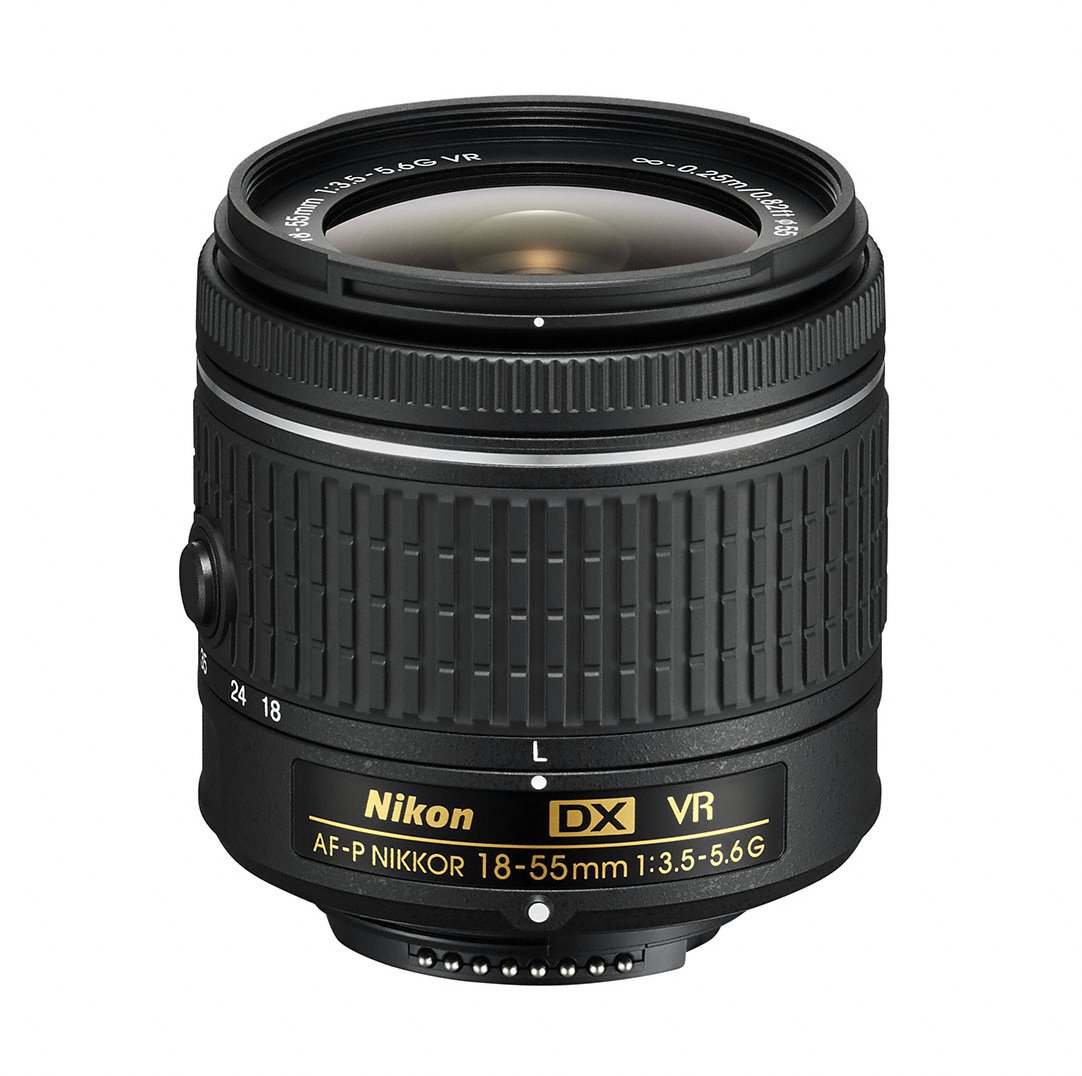
Nikon AF-P DX NIKKOR 18-55mm f/3.5-5.6G VR & AF-P DX NIKKOR 18-55mm f/3.5-5.6G


Nikon launches first AF-P lenses from Nikkor with compact and lightweight design to give you captivating performance in daily photography.


Key Features:

  • Quiet autofocusing
  • Compact and lightweight
  • Utilisation of aspherical lens elements to suppress various types of aberrations 

More Product Info:

Coming Soon.

Availability:

Expected in-store from late January.

Pre-order:

Not available.

SnapBridge – Nikon unveils a new App to enable seamless social sharing


Nikon announced the launch of SnapBridge connectivity, which is a new and innovative software powered by Bluetooth that enables seamless sharing in real time across smart devices.

SnapBridge will be a standard feature in almost every new Nikon camera from 2016 onwards.

It will be available for iOS and Android on Apple AppStore and GooglePlay.

Key Features:

  • Simple, intuitive setup to pair with smart devices
  • Automatic synchronisation of location and time information
  • Seamless transfer of pictures, even during shooting
  • Helpful embedding of credit information
  • Freedom with remote control functions during shooting
  • Seamless sharing to social media and NIKON IMAGE SPACE

Availability:


Available for free download from March 2016.

Guest Blog - Mastering Travel Photography by Leigh Diprose

Guest Blog #3 Our third guest blog comes from Leigh Diprose: Fuji Employee, Fuji Ambassador and Senior Contributor to fstoplounge.com. Leigh has taken the time to consider the question: How do you take great travel photos?

Mastering Travel Photography 

by Leigh Diprose


It’s a common question and one we will explore in this article, but first let’s talk about gear.

If you’re planning a trip overseas, interstate or on your next holiday, there are a few things you should think about when it comes to capturing memories.

GEAR

One of the first things to think about is what type of camera you should take. Rather than capturing photos with a smartphone, consider capturing photographs with a Mirrorless camera that will enable you to get in close to your subject without having to sacrifice image resolution.

With the current line up of Fujifilm X-Series cameras available there are plenty of options for lens combinations and X-Series camera bodies that will offer you a range of focal lengths, ensuring you get the best travel photos at an affordable price.


Three travel lens combinations worth considering are the versatile XF18-135mm F3.5-5.6, XF10-24mm F4 ultra wide angle and for the professional there’s the XF16-55mm F2.8 wide lens. A mix of these lenses will offer a great combination for capturing scenic locations, family portraits, abstract images and the general travel photos you might want to take along the way.

When you couple either of these lenses with a Fujifilm X-T10 or X-T1 camera, your carry on luggage will weigh a lot less than a digital SLR equivalent thanks to the lightweight construction and small size. Additionally these two benefits are a huge advantage to your back when you have a camera around your neck the whole day!

Now that you have your gear all sorted how can you improve your travel photography?

TIPS

Below you’ll find eight travel photography tips that will make a huge difference to your photo album.

Tip 1: Get down low and include foreground interest


Whenever you see a scene rather than taking the photo while you’re standing up, try getting down low to change your perspective of the scene. Think about incorporating objects in the foreground of your frame. What this will do is create foreground interest and offer some perspective to the viewer.

Tip 2: Use a circular polariser


If you plan on visiting a place with harsh light during the day (like Australia or the Pacific Islands) then a circular polariser is a must. When using this special screw in filter on the front of your lens, you’ll retain all the details in the highlight areas (typically the sky).

Often, without a filter the sky will become blown out and overexposed as there is a difference in exposure between the land and sky. By rotating the front ring on the circular polarising filter you can adjust the polarisation of the filter to darken the sky and even out the exposure.

Tip 3: Carry a lightweight small tripod


The reason to include a small tripod in your travel kit (like a 3 Legged Thing Tripod) is so you can capture the sunrise and sunset. If you plan on holding your camera during these golden times, then you’ll most likely end up with blurry photos. By using a tripod, combined with the camera's self timer (or optional cable release) you’ll be able to photograph long exposures that are blur free.

Tip 4: Change your camera's white balance at sunset


If you want a rich warm colour at sunrise or sunset then change your camera’s white balance from ‘Auto’ to ‘Shade’ or ‘Cloudy’. When you do this your photos will instantly appear warmer. Just remember to change your white balance back to ‘Auto’ once the light has disappeared.

Tip 5: Wait until you can no longer see the sun


When you see a sunset happening wait until the sun completely disappears if you want to get the best light. It’s during this period (that will last around 15-20 mins) that the sun in most cases will provide warm soft light onto the clouds and ‘light up the sky’. This is the moment where you want to make sure your camera is on a tripod and your white balance has been changed.

Tip 6: Carry a Instax Share Printer


If you want to take the best portrait shots of people while you travel try giving them an instant print. Start up a conversation with them first and then proceed to take their photo. In exchange for the photo you can offer them an instant print directly from your Instax Share Printer.

The majority of Fujifilm X-Series cameras connect wirelessly to the printer (with no internet connection needed). Simply take the photo, preview it on the back of the camera and send it directly to the printer. Once the photo has printed out you can leave it with the person you just photographed. In most cases this should lead to another opportunity to take an even better photo of them smiling.

Tip 7: Carry spare batteries and more memory than you think you’ll need


Ensure you have enough spare batteries to last a full day and night without having to charge them. If you’re using a Fujifilm X-T10 or X-T1 it’s recommended that you take around two extra batteries. The other essential to take is memory cards. Think about taking multiple smaller sized cards rather than one large one. In other words you don’t want to carry all your eggs in one basket just in case one gets lost with all of your photos.


Tip 8: Look behind you


One of the simplest pieces of advice for travel photography is to look behind you. Often the light may change behind you while you’re photographing or there could be even a better scene just waiting to be captured. Allow yourself the time to explore the scene around you, find your composition and master it!

Hopefully with these simple tips you’ll be able to master travel photography like a professional does! Remember, sometimes the best thing you can do, is to put your gear down and enjoy the culture and beauty that surrounds you without taking a photo.

Happy travelling.


Guest Blog - Tamron Lens Review by Alex Cearns

Guest Blog #2 Our second guest comes from Australia’s leading animal photographer Alex Cearns who took the time out to review two Tamron lenses; the Tamron 35mm f/1.8 Di VC USD Lens and Tamron 45mm f/1.8 Di VC USD Lens. Alex is the Global Ambassador for Tamron’s Super Performance Series Lenses and uses Tamron Lenses in her work daily.

Tamron Lens Review
By Alex Cearns

THE TEST SHOOT
Photographing animals outdoors and in a studio setting means I need versatile, fast and sharp lenses that enable me to get in close and capture detail in a split second.  As the Tamron Super Performance Series Ambassador I was very keen to trial their new prime lens models, both with additional new lens features - the 35mm  35mm f/1.8 Di VC USD lens and  45mm f/1.8 Di VC USD lens. My animal subjects are always moving and I need my equipment to respond immediately when I see an action or expression I want to capture. If I miss the shot, the opportunity to take it might not present itself again.

Since I spend most of my time in the studio I decided to do a studio shoot with my dogs Pip and Pixel, to test the 35mm and 45mm lenses. The general rule of pet photography is that your own pets are the hardest to photograph as the photographer doesn’t have a novelty factor and your own expectations of what your pet will and won’t do differs to those placed on a dog you haven’t met before.  So in short, this was going to be a challenge!

My main go to studio lens is the Tamron 24-70mm but I was keen to break out of my comfort zone for this trial and test five main areas of both lenses which play a combined role in my resulting images.

My 5 factors of consideration were;
·                     how close I could get to my subjects (focal distance)
·                     focussing speed
·                     vibration compensation
·                     lens build/weight
·                     lens motor noise

HOW CLOSE I COULD GET TO MY SUBJECTS
With a depth of field starting at f1.8 for both lenses they are extremely fast in low light. During my test I shot handheld at f13, my usual studio depth of field, and was physically able to get the lens very close to my dog subjects, closer than I expected in fact. The lenses almost have a macro feel to them, given I was around an inch or two from my subject and I was able to capture every minute detail as a result. The image quality was maintained whether I was in close or shooting wide and in my experience; few non-macro lenses have the same up-close capabilities. Being able to move right in on the subject will come in handy when I’m photographing insects and small animals, or when I want to get emphasise part of a larger animal, such as the pattern on their nose, or their eyes.


FOCUSSING SPEED
When using a prime lens, you have to physically move to zoom in. As both dogs were moving for most of their photo session I felt this would be one of the greatest lens tests, pushing them to see if they could focus fast enough for me to capture the shots I wanted. I wasn’t disappointed. Both lenses were able to adapt to focussing through short changes in distance on a subject moving at speed. When working with a live subject, even the slightest movement can cause an image to blur. The 35mm and 45mm both performed exceptionally well at all distances, and the images were pin sharp thanks to the fast locking focus.


VIBRATION COMPENSATION
The incorporation of vibration compensation (VC) into the Tamron 35mm and 45mm lenses is a game changer. It identifies even the slightest camera shake and adjusts accordingly. Not only can you shoot more images in low light thanks to the aperture of f1.8 the VC adds to the versatility of the lens. You can now shoot at smaller apertures (like f13) or at slower shutter speeds and continue to handhold the lens/camera with VC activated, alleviating the need for a tripod. When I’m constantly chasing a subject around through the viewfinder and moving my hands, VC ensures a crisp result when I press the shutter button.


LENS BUILD/WEIGHT
I shoot handheld, without a tripod and the first thing I noticed was that both lenses are comfortable to hold. They are similar in size and weight, with the 45mm slightly heavier of the lenses. Neither is clunky, yet they have a solid feel to them. Both lenses are built tough, with an all-aluminium metal exterior and weather sealing around the camera mount and focussing ring. This additional sealing his will come in handy when I’m photographing wildlife outdoors, protecting the lenses from moisture. The front lens element has an added fluorine coat to repel water, fingerprints, and smudges, enabling for easier cleaning of the lens surface. This is a great feature given the amount of dog nose smudge marks and drooly licks my lenses have to endure.

LENS MOTOR NOISE
My dog clients are very aware of every noise in the studio, from the fan, to the lights, to the lens motor drive. I photograph many nervous dogs, and any sound can be a distraction to them, or cause them to startle. I need lenses with a silent motor, and the Tamron 35mm and 45mm both deliver on this with silent focus, making them super quiet. This helps put my subjects at ease, enabling me to get the shots I need for my clients.


CONCLUSION
Both lenses were a dream to use. I can see them appealing to all types of photographers – wedding, landscape, portrait and architectural especially. VC is an excellent feature, allowing photographers to really push these lenses in different lighting conditions. The 45mm, being only 5mm off a 50mm, will give the current 50mm lenses a run for their money.

These images were captured handheld, at ISO 100, 1/200th sec and f13 with 35mm and 45mm Tamron lenses on a Canon 1DX camera body.


Alex Cearns of “Houndstooth Studio by Alex Cearns”
ABOUT ALEX CEARNS 


Alex Cearns is one of Australia’s leading animal photographers and the Creative Director of Houndstooth Studio. Her images have won numerous awards and have been published widely in Australian and international print and online media, in books, magazines, campaigns, and even in an Australia Post stamp collection. Inspired by the joy of working with animals, Alex’s philanthropy and passionate advocacy for animal rescue has earned her high regard among Australia’s population of animal lovers. She has published three books with Penguin Books Australia and her 4th book will be published with Harper Collins in New York in late 2016. Alex is the Global Ambassador for Tamron’s Super Performance Series Lenses and uses Tamron Lenses in her work daily. 

Guest Blog - Olympus at Work with Rachel Devine

Guest Blog #1
Over the next week at DCW we will be publishing and sharing a number of daily guest blogs from our partners and guest photo bloggers. Our first contribution comes from commercial photographer and photo blogger Rachel Devine. Rachel has been shooting consistently with the Olympus System since 2014. Find out a little more about how she uses Olympus for her work.


Olympus at work
with Rachel Devine


I was first introduced to the Olympus system through the OM-D E-M10 as a family holiday camera in 2014. I was so impressed with the performance and features of that model that I wanted to see if the OM-D E-M1 could revolutionise my professional photography as well.

From the first professional shoot I did with the OM-D E-M1, it was clear that it was a game changer for my career. The camera is lightweight yet still powerful. I was able to get all the shots I needed with no physical strain. The OM-D E-M1 is small enough that it is not at all intimidating to my models on commercial shoots yet sturdy enough that it can keep on shooting all day long. Despite the small size, the camera with its 16.3 MP Live-MOS sensor and Image Processor was able to capture accurate colour and detail while rendering the image with minimal noise in unpredictable lighting situations which is essential to a natural light photographer.


The autofocus system on the camera is fast and accurate even in low light situations and that is an essential feature in my career of photographing fast moving kids. You can set the autofocus to find faces or even refine that down to focusing on the closest eye to the camera. For product shoots and detailed imagery, I like to switch over to manual focus. Here is where the OM-D E-M1 absolutely shines. With focal area enlargement and focus peaking both turned on in the manual focus assist menu settings, I can be absolutely certain that I have tack sharp focus even in macro images with extremely shallow depth of field. What this means is that when I choose the focal point and press the shutter halfway down the selected area of the image is enlarged in the viewfinder. As I turn the manual focus ring the outline of what is in focus begins to glow white at the edges when it is sharp. No more second guessing my eyesight, I know that I have nailed the focus.


The controls on the OM-D E-M1 feel so natural in my hands that I can make necessary adjustments to exposure without taking my eye off the viewfinder. The buttons and dials are all customisable so I have set them to perfectly reflect my shooting style. One of the main benefits of this system over the DSLR is the live electronic viewfinder. I feel more engaged with my subjects with my eye to the viewfinder instead of on the LCD and the viewfinder on the OM-D E-M1 displays the changes to the resulting image as I make them. Now I can shoot confidently through the viewfinder knowing that my shots are perfectly exposed as I press the shutter release without having to stop and check the LCD.As my clients come to me for PR imagery and time sensitive campaigns, I must get my images right in camera so that the editing is minimal and the turnaround time is extremely quick.

With a short deadline and the client present at the shoot, I depend on the OM-D E-M1’s wireless capability. I can either shoot invisibly tethered to an iPad using the camera’s inbuilt WiFi and the Olympus Image Share app or I can transfer the shots wirelessly to the iPad at the end of a session with the same technology. With Live View on the iPad via the Olympus Image Share app, my clients can see the photographs as they are taken without having to stand over my shoulder. With the flexibility of wireless available on all Olympus PEN & OM-D cameras, it allows us to not be physically tied to a computer or confined to a studio. As the input from the client is in real time, adjustments can be made in the moment avoiding the need to set up that particular shot again. All of these innovations with the OM-D E-M1 mean happier clients who feel like they are a part of the process. This feature happens to be my favourite for my family photography as well. The kids love to control the camera for family selfies and with the images then on my phone, I can share them immediately online.

In the case of headshots, editorial and PR photography where deadlines can be even tighter or even immediate in the case of events, I can shoot and transfer to the iPad on site so that the client makes their image selections as soon as we are finished shooting. If there is any editing to be done, I can simply import the selects into Lightroom on my iPad. Simple alterations of exposure, white balance and cropping can easily be done in the app to the delight of the client. If any larger editing requests come up such as complex skin retouching, it is easy with the Creative Cloud version of Lightroom to transfer the working file to my Macbook Pro laptop to finish in the full version of the program on there. Then again, that is rarely needed and most of my headshot clients leave the session having selected their photos, approved the edits and received a link via email to their gallery of final files hosted on my site without the images having even touched a computer.


The way shooting with the OM-D E-M1 has streamlined my photography business is the biggest development I have experienced since going from film to digital in 2004.
I love taking photographs. It has been my passion and career for a long time and shooting with the OM-D E-M1 means I can spend more of my time taking great photographs and making clients happy than sitting at my computer and editing images.

Author Bio
Rachel Devine is a commercial photographer and photo blogger. She has worked in the children’s media industry since the beginning doing headshots and PR imagery for many child actors and models. She has shot ad campaigns and kid clothing lines as well as branching out into photographing grown-ups too. From Los Angeles, California, since 2008 she has called Melbourne, Australia home. This year marks her twentieth anniversary in the photography business. Rachel is the author of four photography books including Beyond Snapshots (Random House/Amphoto/Ten Speed) and Life in Natural Light (Digital Photography School). In her two decades of professional photography she has used most every camera format out there from instant film to large format, but has not shot with anything except the Olympus system since 2014.