Recent Tweets

Shooting the Natural Environment

by James Farley


The natural environment is by far one of the greatest opportunities for photographic endeavours available to us, having such an endless variety of subjects, but also so many different ways to capture them with photography. The aesthetic qualities of the environment have always been a huge focus in the photographic community, with many famous and successful photographers basing their entire careers and bodies of work on documenting the natural world.


Whether you’re shooting plants, wildlife, or landscapes, the environment has an extremely wide variety of subjects, and whether it’s in your backyard or out in the wilderness, there are always opportunities to engage in photographing your environment. It’s important to remember to not damage the environment while shooting, by littering or endangering the natural habitats of animals.


Macro photography is often very popular when it comes to photographing nature and the environment, as it can capture miniscule and fascinating details within the subject that are often missed with the naked eye. Creative photographic techniques and equipment can be used to create stunning abstract artworks from simple plants as well, such as using creative effects lenses, filters, or even just shooting from unusual angles.


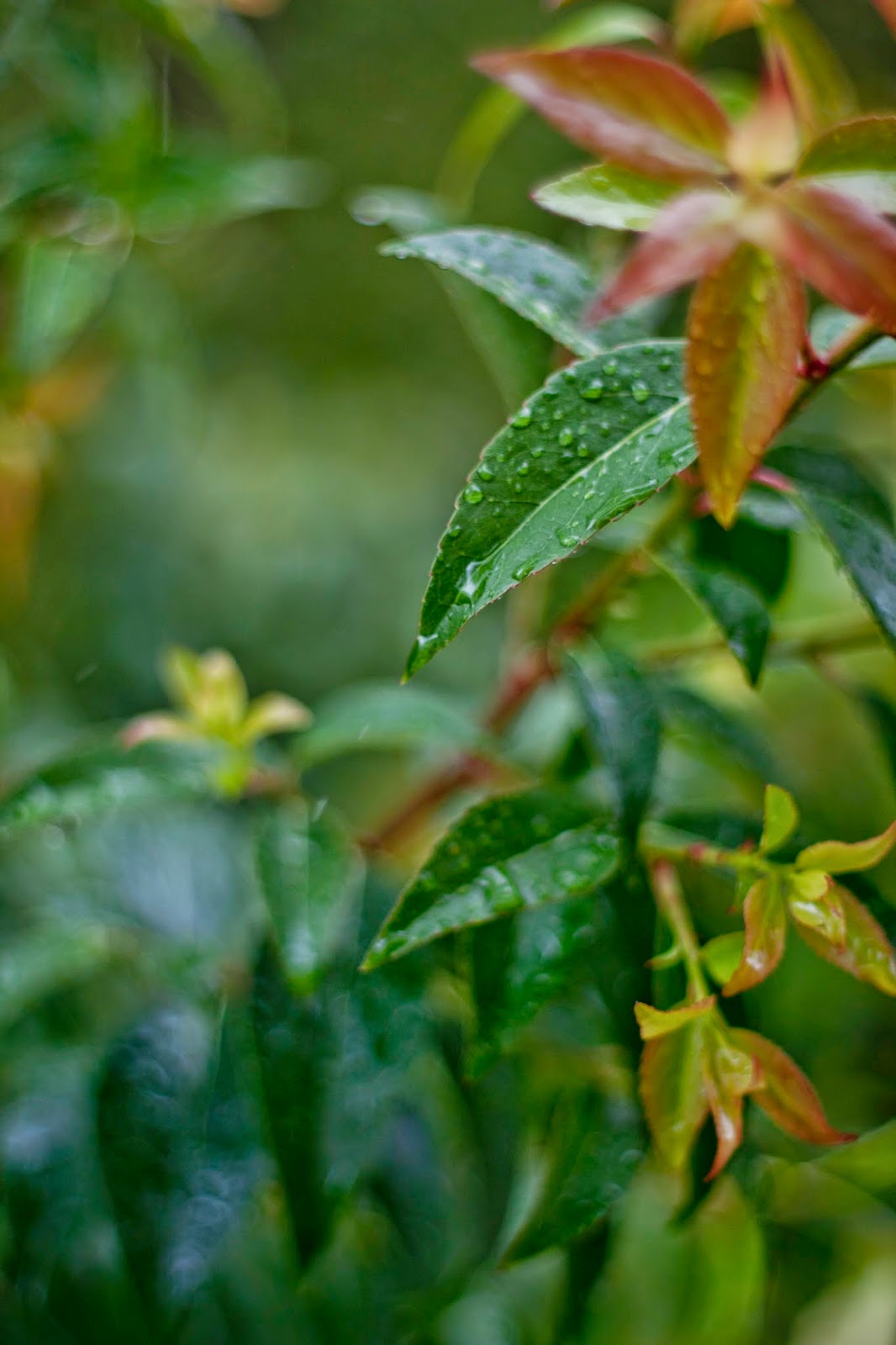
Personally, when photographing the environment, I have always preferred shooting specifically in overcast weather. Cloud cover helps to diffuse the sunlight, and removes most of the harsh shadows, which is extremely helpful in places with a lot of shadow, such as among trees and bushes.


Equipment


Lenses
The choice of lenses for nature photography has a huge impact on the kind of images you will end up with, and can be largely dependent on the style of photography you are aiming for. Macro lenses work fantastically for capturing tiny details, such as flowers, insects, and even bringing out beautiful patterns in objects such as rocks or tree bark.
For wildlife photography, it can help to use a telephoto zoom lens, which can allow you to photograph the subject from further away, while also giving you some versatility in focal length.

Protection and Cleaning
Shooting outdoors and in weather can present quite a few extra dangers to your camera equipment, so it’s always important to come prepared with some protective and cleaning gear. Depending on what kind of photography you are pursuing, equipment such as rain covers or underwater camera housing can be essential. Cleaning products are always necessary, especially in situations where the camera and lens can get particularly dirty.

Filters
There are a few different filters available that can assist when shooting in the environment. UV filters cut down how much ultraviolet light gets through the camera lens, which despite being invisible to the naked eye, can reduce the quality of your images, especially on bright, glary days. Using a circular polariser filter is always a great idea, as it reduces reflections when shooting water, and also helps to make the colours in your images more naturally vibrant.


James Farley works at DCW and is a keen photographer. Check out more of his work here.


Nightlife

Written by Ryan Hoile.
Concepts covered:  long exposures, manual control, tripods + cable release.

The word Photography is based on the Greek terms "phōtos" (light) and "graphé" (drawing). It becomes clear then why low light or night photography is the undoing of many modern cameras.  How can we draw with light when it isn't there?  The truth of course is that light is almost always surrounding us to some degree, even if our eyes struggle to see it.  Cameras allow us to capture light over a longer period of time to build up an effective exposure providing us with unique opportunities and some interesting challenges.
  Image: Fujifilm X-E1, XF14mm, ISO200, f/8, 30 seconds

Controlling Shutter Speed
Your primary weapon for shooting at night lies with controlling the shutter speed, forcing the camera to remain open for several seconds or even minutes to gather up that small amount of light. Set your camera into Shutter Priority or Full Manual control and pay close attention to your built-in light meter as you gradually increase the length of the exposure. Keep the ISO as low as possible to minimise any noise (graininess) in the image. This works best for static subjects or when you wish to show movement over time, such as lights from cars or the rotation of the earth.

Image: Canon 5DmkII, Zeiss ZE 21mm, ISO100, f/5.6, 1 Hour!

Three Legged Friend
Longer shutter speeds become impossible to hand hold no matter how good the image stabilisation is, so you'll want a tripod. These come in all manner of sizes for all kinds of budgets but the key things to look for are:  Ensuring it's sturdy enough to hold your equipment, small/light enough to carry around with ease and versatile enough to take a range of shots.

Image: Canon 5DmkII, Zeiss ZE 35mm, ISO640, f/2, 1/400th sec

One neat option for urban photography is the Gorillapod, because even smaller traditional tripods are still big but one of these can fit inside a small camera bag. With a Gorillapod 
you can make use of your surroundings: ledges, streetlamps, tree branches and handrails become supports for your camera as well as attracting much less attention.

Image: Canon 5DmkII, Zeiss ZE 21mm, ISO800, f/2.8, 1/60th sec
With your camera on a sturdy support consider also using a remote cable release. These are quite inexpensive and available for most DSLR's and some higher end compact cameras. A cable release lets you shoot away without physically touching the camera eliminating any vibration.

Fast and Bokehlicious
Not all low light shooting lends itself to using tripods. When you need to hand hold your shot or your subject is moving, you'll want a "Fast Lens". What's that? It's a lens with a large maximum aperture such as f/1.4 to f/2, these let in a huge amount of light and when combined with a little extra ISO you'll have enough shutter speed to keep things sharp even without a tripod. BONUS! Fast lenses also have the nice ability to render backgrounds considerably blurry. If you frame some highlights in your background they'll turn into great big smooth circles of light. It's a look that will stand well above the typical camera phone shot.

Image: Canon 5DmkII, Zeiss ZE 35mm, ISO640, f/2, 1/50th sec
These are just some of the ways you can use your camera when the sun goes down.  Most locations, especially within cities look very different at night than they do during the day so be on the lookout for interesting uses of lighting... shapes, colours etc. Other night shooting options like introducing your own lighting or flash photography require further reading...

Image: Canon 5DmkII, Zeiss ZE 21mm, ISO800, f/2.8, 1/60th sec
Recommended Gear: camera with manual control, tripod, cable release, fast lens, flash/torch


Hobbies and Collections

Shooting people’s hobbies and collections gives a photographer the widest scope of possibilities. There are no limits to what people collect or do in their leisure time. As a photographer being prepared is always a good mantra to follow.

Telling the Story
When shooting someone’s collection, think through the story you want to tell. Understand the importance of the collection to the person and set up your shot appropriately. A collection can give great insight into a person’s loves, past and passion. Think about how you want your image to tell these stories. You will get a great deal of insight into how to set up your shot if you understand the relevance of the collection. And remember, when you’re shooting a person’s collection or hobby, what you’re really doing is telling a story about the person themselves. So try to bring the humanity to the shoot.

Be Prepared
When shooting a hobby, particularly an action hobby (such as a sport), be prepared. Have your batteries fully charged and make sure your gear is in good working order. You don’t want to miss a great shot because you haven’t checked your gear. If it’s a sedentary hobby, such as puzzles, think about it in the same way as shooting a collection – set up the shot appropriately. Consider your lighting and consider your subject.

Consider the equipment you’ll need
Do you need a tripod? What lighting will you be shooting in? Will you need to bring lighting equipment? Will a compact camera capture your shot? Will you need a DSLR? What lens? 

Axl’s Assignment
One of our Melbourne team members, Axl, shot a friend who has a large collection of goth items.


Some challenges they faced included lighting, which Axl solved by using a light stand and a speed light fired by a radio trigger. Axl mounted the speed light on the trigger, and the combination on the light stand, and put the flash in to manual mode. And then he played with the settings. He tried bouncing the light off the ceiling, but was not able to get the lighting bright enough and finally he used direct flash, diffused by a Gary Fong Diffuser. This meant that although the light was pointed at the scene, it was still spread, so there were no harsh highlights or shadows. Space was also a challenge; Axl rearranged the furniture to create enough space.

Axl used the following equipment:
·           Gary Fong Diffuser
·           Nikon SB-700 Speedlight
·           Cactus V5 Transceivers

Axl chose the 12 - 40mm f/2.8 lens because it’s a versatile lens. The aperture of the lens being a constant 2.8 meant once the lights were set up, their strength didn't need to change when changing the zoom, and the 40mm end was good for a portrait shoot.


Carpool by Rode

Written by Daniel S.

The folks at Rode recently shot a short film to launch their SmartLav and iXY mics.

These mics are designed to work with some iPhone and Android smartphones and offer a high quality recording on the go. These are some very innovative products from an Australian company. To check compatibility with your phone give us a call on 1300 365 220 or follow the above links.

The sound in the film is all recorded using the SmartLav microphones. If you would like an insight into the behind the scenes Hollywood movie magic we have included that video below too. That one was shot using the Rode iXY and SmartLav mics.

Enjoy!
 

Carpool - A short film using RØDE smartLav & iXY from RØDE Microphones on Vimeo


Behind the Scenes of Carpool - a short film using the RØDE smartLav & iXY from RØDE Microphones on Vimeo.

Daily Life in Your Town or Suburb

By James Farley

When shooting in your home town or suburb, it doesn’t need to be about the main tourist attraction or a big event, notable landmark or iconic building – the most important thing is to focus on what you find most interesting, inspiring and beautiful in the area. A great sense of adventure and willingness to explore is essential in finding those wonderfully unassuming locations and photo opportunities.

Canon 40D, Vintage 1960's Asahi 50mm f2.0 lens. Location: Elderslie, NSW. Photographer: James Farley

Take some time to document what it is that gives your home town or suburb its unique character. Use the familiarity that comes with being a local to your advantage, and try to reveal locations that the average sightseer would often overlook. One of the best practices for achieving this kind of project is to just take a day, or even just a few hours, to wander around with your camera and actively seek out the interesting and intriguing elements of your home town or suburb that give the area life. Try making a list of any places around the area, big or small, that you find interesting in any way, and just shoot your way through it.

Fujifilm X-T1. Location: Newtown, NSW. Photographer: Trent Crawford

No matter how mundane or ordinary you may think your home town may be, there is always something or somebody there worth documenting. Taking photos of what is familiar to you can expose a whole new perspective of people and places you may often take for granted.

But the main point of advice is to open your eyes to the beautiful and interesting things that surround you in the everyday. Exploring and documenting the everyday life of your own home town is a fantastic creative outlet, and is really something to enjoy and to use to expand your own passion for photography.

Camera
The great thing about photojournalistic endeavours such as this is that the importance is often focused more on creating a snapshot of a time and place. So unlike other, more technically demanding fields of photography, you don’t always need the highest level of camera gear; anything that you are most comfortable taking photos with is just fine.

That being said, it is always incredibly useful to use equipment that allows for manual exposure control, as it opens up worlds of creative and technical opportunities in your photography, so a good DSLR or CSC camera will never go amiss.

Lenses
When it comes to this kind of photography, I believe that the best options are either a mid to wide angle fixed focal length lens, such as a 35mm or 50mm, or a more versatile zoom lens, such as an 18-55mm or 24-70mm.

Bags and straps
It’s always a good idea to invest in reliable transporting equipment for your camera, especially when it comes to photojournalism. Bags and backpacks that allow for quick and easy camera access are always fantastic, as having your camera on hand at all times means that you’re much less likely to miss that perfect shot.

Other Accessories
When shooting outdoors, it’s extremely beneficial to use a lens hood and UV filter, as not only do they help to reduce glare, but they also give some protection against minor bumps and scratches.

Depending on what kind of photos you’re taking or the situations you’re in, a light tripod or monopod will definitely come in handy from time to time.

If you’re like me and love shooting in overcast, rainy weather, then rain covers are absolutely necessary for keeping your equipment safe.

Fujifilm X-T1. Location: Newtown, NSW. Photographer: Trent Crawford

The Old and the New

Written by Daniel Smith


Film... wow the reminiscent quality and grain. Ponder this too much and beware you may be labelled a hipster.

What is it about film that holds such appeal? Is it the romantic notion of an old film camera you used to have, or one that was owned by a friend or relative? We are in an age where the proliferation of imagery is huge. There is the complete saturation of images across our whole waking life and we can take more and more all the time. What I liked about film was the fact that I had a single roll of film, (sometimes more), but often a single roll of film. This had to tell my story.  Like countless photographers before me I had a series of 24 (or 36) frames on which to tell my story. And after shooting this roll of film I had to wait to see the images. Waiting for an image... what a crazy notion!

In an age where Hollywood directors and cinematographers are pushing to shoot their movies on film stock against industry pressure, digital image technology has never been so prolific and accessible. Digital manipulation is often used to emulate the look of film. Instagram, Hipstamatic, Nik software and in-camera effects (amongst others) are all tools that photographers use to give their digital images a film look. This software emulates something beautiful that existed in film. At times we are taking a digital image on a $3000 camera and making it look like it was taken on a light leaking $100 toy camera.

There is a functionality and style that is returning to cameras. After the industry got very caught up with megapixels and zoom size at the advent of digital, a lot of the camera essence was lost. Although dressed in retro garb this essence is coming back. The Nikon Df (pictured) sits as the current leader in this class, with a return to the classic functionality of the camera: aperture, shutter speed and ISO. Now while not the first camera to trade on this ‘old is new again’ simplicity it seems to be the one that gets it the most right. At a much bigger size than the Nikon FM2 film camera (pictured) it is no small camera, but wow does it pack a punch.

The Nikon Df is not without its bells and whistles but it in no way feels weighed down by these bells and whistles. Admittedly it is very different to shooting a roll of film, for one there is a screen on the back.  Put a 50mm manual Nikon prime lens on though and the very act of shooting an image and capturing that moment is reminiscent of the simplicity of a good, old school, solid film camera.

If you are wishing for a return to a simpler time, this may be the camera that you have been looking for.

Below are some other back to basics and retro style cameras. What are your thoughts? Have they hit the mark? We would love to hear from some current or ex-film shooters.

Fujifilm X100S
Fujifilm X-Pro1
Fujifilm X-T1
Olympus PEN E-P5
Olympus OM-D EM-5
Olympus OM-D E-M1
Panasonic GM1
Panasonic GX7
Pentax Q
Nikon Df


ABOVE IMAGE: Somewhat ironically for this blog post about a Nikon digital camera that is designed in a similar style to the older Nikon style film cameras, this shot was taken digitally with a Canon DSLR and then processed to look like a film image on the computer (Nik software).

Shooting to tell a Story

Photography is an amazing way to tell a story and to shine a light on what matters to you. Visual imagery is emotive, real and helps an audience to understand the passion of the photographer. Shooting in a documentary or journalistic style is a great way to produce a strong and coherent body of work on a subject you are passionate about.  It can be a hard-hitting topic like a demonstration at town hall, or a light-hearted topic like your child’s first swim lesson. There’s no limit to subject matter.

As a beginner it may be a challenge to move away from the standard point and shoot photography that takes up much of your time. But getting out there and giving it a go is the first step to improving, and to telling your story.  

Here are some tips that’ll help you to be ready when you start to shoot what matters to you:

Get ready 
Be prepared with batteries fully charged (both primary and spares) and test them in-camera - this will also give you the opportunity to ensure all necessary gear is in good working order. Pack your bag with two things in mind - what equipment do I want to take and what equipment do I absolutely need.
And triple-check your camera settings before you leave.

Think through your story
What matters to you? What story do you want to tell? What shots will you need to capture to tell that story? Having a pre-determined idea of the story and shots will help you to tell the story effectively. Be patient as you may not get the shot straight away. The photographic style you choose can say a lot about the subject and the aim should be to always show the reality of the subject’s situation. The challenge is to capture the humanity in the scene and this comes from practice, patience and experience.>

Research
You may need to do some homework before you start.  Check with the organisers of the event to see if there are any restricted subjects or areas and if you need a permit to shoot in a specific location. You may need to get permission from Council or a business owner. Your behaviour in meetings and in the lead up to the shoot may make a difference about what access you are granted – be professional and build credibility. If it's a public event held on public property then you should generally be fine to simply show up and shoot.  

Context
Take note of locations, dates, times and names as you shoot because the photos will need to be given context with a few words attached to each image.  People need to know what they are seeing and their significance within the context of your shoot. Remind yourself often that you are shooting to tell a story. Ask yourself, what shots, information and context does an audience need to understand what matters to me?  

Equipment
The equipment required is dependent on the story type. For some stories, being unobtrusive and ‘under-the-radar’ is essential, so therefore using a compact but high-quality camera is important.  Some suggestions are Fujifilm X100S, Olympus OM-D E-M1 and Sony A7R . These are all compact cameras with serious sensors and high quality optics yet they are hard to notice and whisper quiet when shooting with them.

If there is no need for a low-profile then feel free to equip yourself with what you think you will need.  

Suggested equipment

  • Wide angle lenses
  • Large aperture lenses
  • Flash (like a 600EX or SB 910)
  • Gorilla Pod
  • Flash Triggers
  • Monopod

Shooting Buildings and Monuments - get a new perspective!

By Marc B

Shooting buildings and monuments can be very challenging to get right.  It’s easy to stand in front of a building and snap off a few shots, but what does it take to get a truly exceptional photograph?  There are many things that need to be considered when it comes to this type of photography, not least of which is location, light and perspective. 

Location
The best part of the photo taking process is actually finding either a building or monument to photograph, and finding a different perspective than anyone else.  This involves a bit of walking and looking.  You don’t need to shoot a well-known landmark or building; indeed they have all been photographed to death, so it’s good to find something a little out of the way that may not get the attention it deserves.  I have seen amazing photographs of drains, old petrol stations and even car parks. The limit here is your imagination and skill in capturing a compelling photo of what could normally be considered a ‘boring’ subject. 


Canon 5DMk2, 50mm, f5.0, 1/125 second. Shot in Hamburg, Germany

Lighting
Here is the real challenge.  Getting the lighting right is really what photography is all about, but how do we control the light on something like a building?  A little bit of patience is required as you will need to wait until the light from the sun (or moon!) is at just the right angle for the photo you want to achieve.  There are a few Apps that you can get for smartphones that can tell you where the Sun will be at any time on any day for the chosen spot. Knowing this information will help you plan your timing to be on location.  A nice technique is to wait until ‘Golden Hour’ which is a time just after sunset where the sky takes on a nice deep blue - this lasts for varying amounts of time depending on the time of year and your location.  The lighting of ‘Golden Hour’ adds great colour to the sky while at the same time leaving enough light to have some details in the shadows of buildings.  

You will definitely need a steady tripod for this kind of work as your shutter speed will be quite long, particularly if you are using a low ISO (which you should be).  Also a cable release would be very useful here.


Canon 5DMK2 70mm, f2.8, 0.6 seconds. Shot at Edinburgh Castle, Scotland


Change your perspective
Here is what almost everyone does: they see something that looks like it would make a good photo and they lift the camera to their eye and take a shot.  This ends up looking like every other photo of that building (or waterfall or whatever) ever since cameras where invented.  This is where you need to get creative.  Think about the perspective you want to use to make your photo different (changing lenses does not alter your perspective; it changes your angle of view only).  Can you get up high and take a photo from a nearby building?  Can you find somewhere that allows you to lie flat on the ground and shoot up at the building from an extreme low angle?  Try to think of anything that will give your shot a wow factor that is different from the standard point and shoot mentality.  Lens selection is also important. Do you shoot with an ultra-wide angle?  Stand back and shoot with a standard lens and get straighter vertical lines?  If you have the time, try as many options as you can.  

Patience
Above all you will need patience - finding the location, working out the best time of day for light and then nailing the perspective will take time. But in the end you will end up with a photo like no other - one with some thought and planning behind it, which will stand above the average snapshot.  Get cracking!  Feel free to share you results with us and remember that the first 10,000 shots are the worst!

Recommended equipment:
  • Lenses of varying focal length but particularly wide and mid-range lengths such as 10-22mm, 24-70, 18-55
  • A sturdy tripod (essential)
  • A cable release for your camera
  • Filters like a Cir-Pl, ND and graduated ND filters are great for certain situations (take a look at our recent blog on the Benefits of Filters)
  • Lens hoods can be helpful when shooting outside
  • A torch if you’re shooting at night
  • A weather resistant camera bag

Owning Multiple Cameras – Part 2

…different cameras for different uses

By Marc B

Owning Multiple Cameras – Part 1 explored street photography and special occasion photography. Below are some suggestions of camera types that are suitable for specific situations. Remember, any camera is better than no camera at all!

Landscape Photography
Landscape photography is all about wide open spaces, detail, sharpness and rugged equipment. You can use a few different cameras for this type of photography.  The only essential would be a camera that can use filters as landscape photographers have a need for a few different types of filters (
ND, ND Grads, circular polarisers etc.).  A Compact System Camera (CSC) is ideal for this as they are light, some are weather resistant and have some high quality lenses that can take a filter.  Another advantage of a CSC is that they are compact enough to go in a backpack if you are hiking, but good enough quality to get awesome results.  The lens selection is great and there are plenty of cameras to choose from.

Everyday Photography

There are times when the phone camera just doesn’t cut it (indoors, low light, if you need to zoom) and you need a camera that can far outdo the results from what your phone can do but you don’t want to lug around a big DSLR.  For this there is a range of small but high quality cameras available with built in Wi-Fi so you can still share those moments instantly.  But now you can do it with awesome quality.  Some cameras that fit this category are the Canon S120, the latest in a long line of ‘S’ series cameras that are known for their low light performance, the new Fujifilm XQ1 which is the smallest Fuji camera yet to feature their very well respected X-Trans sensor and it also features no low pass filter for extra sharpness.  Other cameras are the Sony RX100 II which is very small but with a larger sensor size than most other compacts for exceptional image quality.  All of these cameras feature Wi-Fi and all have apps available to stream your images to your smart device for uploading to your social networking site of choice.  The main difference being that your photos will be of a much higher quality than your friends’ photos.

Travel Photography

Travel photography encompasses such a wide range of photography styles (architecture, portrait, landscape, street and general photography) that it is impossible to find one camera to do it all.  The best option here is to take two cameras (this article assumes photography will be a major interest when you go on holidays), one of them should be your DSLR or CSC with appropriate lenses, and the other should be a good compact super-zoom camera.
The DSLR is the go-to camera that you use for the majority of the trip, these photos are unrepeatable events and you should use your best gear to capture them.
The compact is your back-up camera and is the camera to take with you if you find yourself going to events that do not allow (or you simply don’t want to take) a DSLR.  The compact should have a big zoom for those times when you need to get in close and Wi-Fi for transferring to your smart device to share the moment with friends and family.  Some good options here are the Panasonic TZ40 with a 20X optical zoom, Wi-Fi and NFC.  This comes from a long line of very successful travel zoom cameras from Panasonic.  The Olympus SH-50 also features a slightly bigger 24X zoom lens with an advanced 5 axis image stabilisation feature when using video to really steady those hands.  It also uses a 16 MP BSI CMOS sensor for great low light ability.  Nikon also has the popular S9500 travel zoom which features a 22X zoom, 18MP sensor, Wi-Fi, GPS for tracking where you took the photo and full HD video recording.
These are just a few options of cameras available for these photographic styles, there are plenty more in-store so come on in, call us or check out our website to see what else we have on offer!

Owning Multiple Cameras – Part 1

…different cameras for different uses
By Marc B
If only a one-size-fits-all camera existed, one that had the optical and sensor quality of a high end DSLR but in the size of a compact, with a massive zoom range but also wide open apertures.  Such a camera doesn’t exist yet so it’s left to us to pick and choose the right camera for the right situation.  This is great news for us cameraholics who love an excuse to buy yet another cool camera.  But which camera suits which situation?
Most photographers find themselves in a variety of situations that call for different lenses and sometimes completely different systems.  Below are some suggestions of camera types that are suitable for specific situations although any camera is better than no camera at all.

Street Photography

Street photography calls for a small, unobtrusive camera that still produces high quality images.  There are two popular choices for this area.  The first is a compact, fixed lens camera like the Fuji X100s or X20, Canon G16, Nikon Coolpix A or the Sony RX1 R at the high end.  These cameras are relatively small in size but give an outstanding result in challenging conditions.  The advantage of them being so small is the ability to take photos unobtrusively and candidly in a street situation or even a social occasion like a wedding (if you aren’t the primary photographer) where you might want a more relaxed and less posed photo. 
Another option would be a full size DSLR but with a small prime lens attached, like a 50mm or 24mm large aperture lens.  These are cheaper than a high quality zoom lens but can be of similar or better optical quality and in a much smaller form factor.  These cameras can be set up easily for pre focusing (a technique that involves pre focusing a known distance from the camera so you can shoot instantly without waiting for the camera to focus) so you don’t miss that vital moment.

Special Occasion Photography

This refers to things like professional wedding or portrait photography where the image quality is of absolute importance.  For this you want to have the best quality you can afford and ideally this would be professional quality glass with a full frame DSLR.  Size and weight factors are less important here than in other types of photography as the final result needs to be of the upmost quality.  The lens selection is basically the ‘three amigos’; 16-35mm, 24-70mm and 70-200mm lenses (or very similar focal lengths).  This gives the range required for almost any situation you are likely to be in.  Here is a link to our lenses page.
As an extension of this, the cameras listed in the street photography section would also be appropriate as a second camera as long as you understand the limits of the cameras.
Next blog, I’ll be exploring cameras to use for landscape photography, everyday photography and travel photography.